PIEMONTISSIMO READING

Barolo vs Barbaresco:

What’s the Difference?

Barolo vs Barbaresco

If you have spent any time drinking wine in Piemonte, you have probably heard Barolo described as the King of Wines. It is one of Italy’s most famous wines, bottles from celebrated producers can command serious prices, and for many visitors to the Langhe, drinking Barolo in Barolo is practically a pilgrimage.

Drive about 20 kilometres northeast, however, and you arrive in Barbaresco. The grape is the same. The landscape is unmistakably Langhe. Both wines have Italy’s highest DOCG classification. And yet the wines, and in our experience the places surrounding them, can feel surprisingly different.

And here comes our potentially controversial confession: we actually prefer Barbaresco. But before the Barolo people come after us, let’s explain.

Barolo and Barbaresco are both made from Nebbiolo

The most important similarity is also what makes the comparison so interesting. Both Barolo DOCG and Barbaresco DOCG must be made from 100% Nebbiolo, Piemonte’s extraordinary native red grape (which is delicious in its own, “non fancy label” form). Nebbiolo is responsible for some of the region’s most celebrated wines and is famous for combining surprisingly pale colour with considerable structure, acidity and tannin.

In the glass, you will often find red fruit, rose, herbs and spice, while older bottles can develop the earthy, savoury characteristics that make Nebbiolo so distinctive. But Nebbiolo is also particularly good at expressing where it has been grown. Change the soil, altitude, exposure and microclimate and you can end up with remarkably different wines, sometimes from vineyards only a few kilometres apart.

That is where Barolo and Barbaresco begin to separate.

DOC or DOCG: is Barolo classified higher than Barbaresco?

No. This is worth clearing up because the fame surrounding Barolo can give the impression that it occupies a higher official classification.

Both Barolo and Barbaresco are DOCG, Denominazione di Origine Controllata e Garantita. In fact, their official histories run remarkably parallel. Both were recognised as DOC wines in 1966 and subsequently became DOCG wines in 1980.

So Barolo is not the “higher classification” and Barbaresco the slightly lesser version. Legally, both sit at the top of the Italian appellation system and both have detailed production rules governing where the grapes can be grown and how the wines can be made.

The difference is in the territory and the rules within those individual denominations.

Where is Barolo produced?

The Barolo production area sits southwest of Alba, among some of the most recognisable vineyard landscapes in the Langhe.

Barolo can be produced throughout the communes of Barolo, Castiglione Falletto and Serralunga d’Alba, as well as designated parts of La Morra, Monforte d’Alba, Novello, Verduno, Grinzane Cavour, Diano d’Alba, Cherasco and Roddi.

If you are visiting the area, however, the names you are most likely to encounter again and again are Barolo, La Morra, Monforte d’Alba, Serralunga d’Alba and Castiglione Falletto.

And this is where learning about Barolo gets considerably more complicated, or more interesting, depending on how seriously you take your wine. A Barolo from La Morra can be quite different from one made in Serralunga. Then there are the individual vineyards and official geographical mentions, or MGA, Menzioni Geografiche Aggiuntive.

You can very quickly go from “I quite like Barolo” to standing in front of a vineyard map discussing which side of a hill your grapes came from. Welcome to Piemonte, or as we would say; it’s Piemontissimo.

And where is Barbaresco produced?

This is one of the biggest geographical differences. Barbaresco has a much more compact production zone covering Barbaresco, Neive and Treiso, together with the San Rocco Seno d’Elvio area of Alba. The official Barbaresco Enoteca currently records about 763 hectares planted with Nebbiolo for the denomination, producing an average of around 4.5 million bottles annually.

On a map, it really isn’t far from Barolo country. Alba essentially sits between the two areas. Yet the atmosphere feels different.

Barbaresco itself is tiny. Neive is one of those almost suspiciously pretty hilltop villages that Piemonte produces with irritating regularity, while Treiso sits among vineyards with spectacular views across the Langhe. You can quite easily explore the area without feeling as though you need to tick off a long list of famous wine villages.

So what does Barolo taste like compared with Barbaresco?

This is where wine comparisons have a tendency to become slightly ridiculous. You’ll often read that Barolo is bigger, more powerful and more tannic, while Barbaresco is softer, more elegant and approachable earlier.

There is some reasoning behind the generalisation, but we wouldn’t use it as a rule. There are powerful Barbarescos and remarkably elegant Barolos. The individual vineyard, vintage, producer and winemaking choices matter enormously. Even within Barolo itself, wines from different areas can behave very differently.

The better way to think about them is as two expressions of Nebbiolo from two neighbouring but distinct territories. Barolo has traditionally been associated with wines requiring considerable patience. Young Nebbiolo can have formidable tannins, and great Barolo is capable of ageing for decades.

Barbaresco can often show its charms a little earlier, while still having plenty of structure and ageing potential. That relative accessibility is probably part of the reason we have gravitated towards it. But it isn’t “Barolo Lite.” A good Barbaresco is a serious wine in its own right.

Barolo and Barbaresco have different ageing requirements

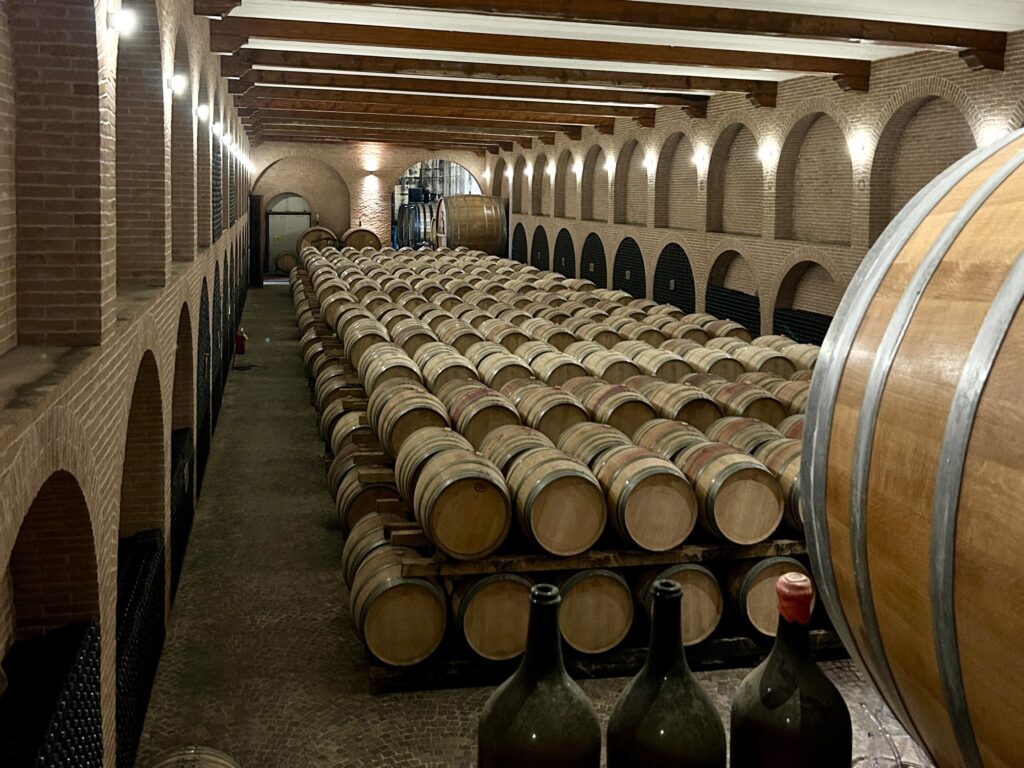
Here we get to one of the clearest differences written into the rules. Barbaresco must be aged for a minimum of 26 months, including at least nine months in oak. Barbaresco Riserva requires 50 months.

Barolo has traditionally required a longer ageing period before release, which contributes to its reputation as the more structured and slow-developing of the two wines.

That distinction doesn’t mean one is better. It simply means the denominations impose different minimum requirements on producers. And, importantly, these are minimums. Individual winemakers can and do make very different choices about how they mature their wines.

Barolo the wine vs Barolo the place

There is another difference that has absolutely nothing to do with what is inside the bottle. Barolo is famous.

The village attracts wine lovers from all over the world, and understandably so. There are excellent producers, wine shops, restaurants and the wonderful vineyard landscape surrounding it. La Morra has one of the most famous viewpoints in the Langhe. Monforte is beautiful. Serralunga’s castle rising above the vineyards is one of those views that never really gets old, however many times you drive past it. We would however not focus too much on staying in Barolo if you’re visiting Piemonte. The village is small and more perfect for a day trip rather than booking yourself in for a week.

If you are visiting Piemonte specifically for wine, Barolo country deserves its reputation. But its international fame also means it can sometimes feel a little more polished and established as a wine destination.

And this is where Barbaresco wins us over.

Why we actually prefer Barbaresco

Time for the controversial part. We love Barolo. We drink Barolo. We take friends to Barolo. But if you asked us which of the two we personally find more exciting at the moment, we’d choose Barbaresco.

There is something about the area that feels a little younger and less formal to us. We’ve come across more and more small-scale producers and a younger generation of winemakers making really interesting wines, and visiting them can still feel wonderfully personal.

That doesn’t mean Barbaresco is some undiscovered wine region. Far from it. Some of Piemonte’s most famous producers are based here, and Barbaresco has an international reputation all of its own. It just feels different.

And perhaps that is reflected in the wine too. We often find ourselves reaching for Barbaresco because it gives us everything we love about Nebbiolo while sometimes feeling a little more immediately expressive. This is entirely personal preference, of course. Ask someone from Barolo and you may receive a very different answer.

You also get to drink wine in a church

Which brings us to one of our favourite places in the area. In the centre of Barbaresco you’ll find the Enoteca Regionale del Barbaresco, housed inside the former Confraternity of San Donato. Or, as we call it: the wine church.

The building was acquired by the Comune di Barbaresco after the church had fallen out of use, and the regional enoteca opened there in 1986. Today it represents more than 150 Barbaresco wineries.

And it is brilliant. This isn’t an enoteca where somebody has selected six fashionable producers and decided those are the bottles you need to know about. Its purpose is to represent the denomination, and it sells Barbaresco from more than 150 different wineries. There are also three Barbarescos available to taste by the glass each day.

For somebody trying to understand Barbaresco, it is difficult to think of a better starting point. You can taste a few wines, discover producers you’ve never heard of and then potentially arrange visits directly with wineries in the surrounding villages.

Also, you’re drinking Nebbiolo in a former church. Piemonte occasionally makes writing travel recommendations very easy.

Barolo or Barbaresco: which should you visit?

Both. Sorry.

If you’re already travelling around the Langhe, choosing between them doesn’t make much sense geographically. They’re close enough that you can experience both, and doing so actually makes the differences more interesting.

Spend a day around Barolo, La Morra, Monforte and Serralunga. Visit a producer, have lunch somewhere good and begin to understand just how much variation exists within Barolo itself. Then head across Alba and spend some time around Barbaresco, Neive and Treiso. Start at the wine church, taste a few different producers and see where the afternoon takes you.

That’s one of the things we love most about Piemonte wine. You don’t have to understand every cru, soil type or vintage before you’re allowed to enjoy it. Start drinking, start visiting producers, ask questions and gradually the map begins to make sense.

So, Barolo or Barbaresco?

If you’re asking which is the better wine, there isn’t an answer. Both are DOCG wines made entirely from Nebbiolo. Both can produce extraordinary bottles capable of ageing beautifully, and within both denominations there is so much variation that comparing the names alone only gets you so far.

But if you’re asking which one we’d rather spend a Saturday exploring? Barbaresco.

Give us a couple of small producers, a wander around Neive, a glass or three in the wine church and dinner somewhere in the hills afterwards, and we’re very happy indeed.

The King of Wines can keep his crown. We’ll be over in Barbaresco.

Scroll to Top