PIEMONTISSIMO READING
The Illusion of Cheap Italian Houses
is it cheap for a reason?
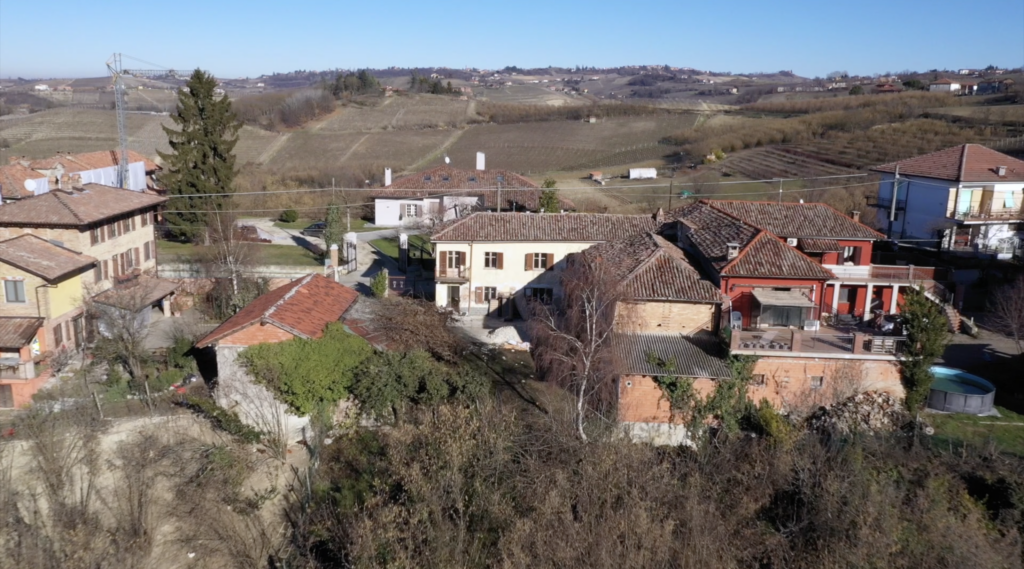
Image: Our very own Italian Dream House at the time of purchase, dec 2021.
We have bought, renovated, and lived in an Italian property since 2021. Our experience includes a full renovation, long-term ownership and navigating the Italian buying process as non-Italians.
Italy has become shorthand for the dream of affordable property abroad. Headlines promise houses for one euro, social media is filled with sunwashed ruins bought for less than a used car, and the narrative is always the same: buy cheap, renovate slowly, and enjoy a life of long lunches and Il Dolce Far Niente.
The idea is seductive, but the reality is way more complicated.
In our experience, cheap Italian houses Do exist. Truly cheap Italian homes, once they are functional, compliant, and comfortable to live in, almost never do.
The 1€ house story, beyond the headline
The €1 house schemes are real and widely promoted by Italian municipalities trying to slow depopulation and revive villages that have been hollowed out over decades. These comuni (municipalities) are not giving away homes out of generosity. They are transferring responsibility, risk, and cost to private buyers in the hope that someone else will do what the local economy no longer can.
What is rarely mentioned in the headlines is that the 1€ price is symbolic rather than meaningful. In practice, buyers are almost always required to commit to a minimum renovation budget, often in the range of €20,000 to €50,000, sometimes more, before the purchase is even approved. A renovation plan prepared by a local architect or geometra is normally mandatory (only there, at least 5000€ of the renovation budget is spent), along with a fixed deadline to complete the work, commonly two to three years.
Administrative fees, notary costs, deposits, and professional services quickly eclipse the purchase price. In some municipalities, buyers are also expected to register residency once the property becomes habitable, or at least demonstrate an intention to engage locally rather than treat the house as a distant holiday project.
Then there is the issue of location, which is often glossed over in marketing material. 1€ houses are almost always found in villages with shrinking populations, limited services, and infrastructure that has not been meaningfully upgraded in decades. Water systems can be outdated, electricity supply may be underpowered by modern standards, and reliable internet access is far from guaranteed. Public transport, if it exists at all, is usually infrequent.
The houses themselves are rarely simple renovation projects. Roofs often need replacing, moisture problems are common, and structural work is frequently unavoidable. What looks like a cosmetic project on Instagram is, in reality, a full scale rebuild hiding behind old stone walls.
By the time a 1€ house is legally purchased, professionally renovated, and genuinely comfortable to live in, total costs often land well into six figures. The initial price is cheap, the outcome is not.
With that said, there are still many happy 1€ house buyers out there. It all depends on what you are looking for, and how much money you can spend.
The €50,000 - €100,000 segment: more realistic, still misunderstood
Move up the ladder and you enter the range that attracts most serious foreign buyers: properties priced between €50,000 and €100,000. These houses are often structurally …sound, usually have a roof that somehow works, and are connected to utilities, which makes the legal and practical side of purchasing far more straightforward.
This is where expectations start to drift.
In Italy, “livable” does not mean “modern” (eg italian realtors will still call a house “renovated” if it has been upgraded in the early 2000’s) Many houses in this range still rely on electrical systems installed half a century ago, old steel or lead pipes, minimal grounding, and heating systems that no longer meet today’s standards. Windows are often single glazed or original wooden frames, charming in photos but inefficient and expensive to heat around.
Bringing a house like this up to modern expectations usually requires more than surface-level work. Replacing plumbing and electrics almost always means opening walls and ripping up all those beautiful old floors, which triggers a cascade of additional costs. Once floors come up, insulation, new concrete slab and finishes follow. Windows are often one of the single largest expenses in the entire renovation, particularly if energy performance and regulatory compliance are taken seriously.
A house bought for €90,000 can easily become a €250,000 – €350,000 investment once it is fully modernised. Many buyers underestimate how difficult it is to “renovate gradually” when core systems are involved. Paint and furniture can wait. Electrical safety and plumbing usually cannot. We ourselves were very naive when it came to this (read our story further down the post).
Really cheap houses are cheap for a reason
One of the most persistent misconceptions is that Italian property is cheap because the market is inefficient or undervalued. In reality, prices reflect demand with brutal accuracy.
Houses are cheap where people no longer want to live. Young residents have moved away, jobs are scarce, services have been reduced, and the housing stock no longer matches how people want to live today. Maintenance has often been deferred for generations, not because owners were careless, but because there was little incentive to invest.
If a house looks unbelievably cheap, the most important question is not “what a bargain,” but “why has no one else bought it?”
Sometimes the answer is relatively harmless: an inheritance dispute, poor marketing, or bad timing. More often, the reason is structural, legal, or economic. Access issues, shared ownership, planning restrictions, renovation costs that exceed the property’s finished value, or a location that simply does not support long-term demand.
Cheap houses are not inherently bad investments. They are simply more complex than they appear, and complexity is rarely free.
Renovation costs: Where budgets quietly collapse
Renovation is where most Italian property budgets fail, not because buyers are careless, but because costs are routinely underestimated. After spending the last 4 years surrounded by other foreign (and local) house renovators, I can tell you that this is true in 99% of cases.
In northern Italy, a full renovation of an older property typically falls between €1,500 and €3,000 per square meter, depending on structural work, energy upgrades, logistics, and finish level. These figures already assume sensible choices rather than luxury specifications.
Regional variation matters. In Puglia, labour costs are often lower, with full renovations commonly ranging from €1,200 to €2,200 per square meter, although timelines can be longer and access to specialised trades more uneven. Tuscany, by contrast, frequently matches or exceeds northern Italian prices, with renovations often landing between €1,800 and €3,200 per square meter, driven by demand, regulation, and higher finish expectations.
These numbers are not worst-case scenarios. They are realistic benchmarks for creating a compliant, functional home with modern systems.
A 100 square metre house bought for €100,000 and fully renovated in northern Italy will often end up costing somewhere between €250,000 and €400,000 all in, before furniture, landscaping, or the inevitable surprises that appear once walls are opened.
A real example: Our Italian Dream House, our numbers
To ground all of this in reality, it is worth sharing our own numbers.
We bought Our Italian Dream House (220 sqm 1920’s farmhouse in Piemonte) in December 2021 at a price that was, even by Italian standards, unusually low. The house had been inherited, was no longer used, and the owners wanted a clean and fast exit. We were in the right place at the right time.
Here is what the purchase actually looked like on paper:
€53,200 purchase price
€2,700 registration tax
€3,000 agency fee
€2,031 notary
€450 translation and power of attorney
Total acquisition cost: €61,381
At the time it felt like an extraordinary deal. And it actually was. Even today, we are very aware that the house was underpriced relative to the local market.
The renovation however, was a completely different story.
What we initially believed would be an €80,000 renovation completed in four to six months slowly turned into a multi-year project. We have not tracked every single cost in detail, but once everything is finished, our total renovation spend will land at approximately €250,000 if we are lucky (and then we have done huge chunks of the dirty work ourselves). The timeline stretched to more than four years. The budget more than tripled. And we are still not finished.
This was not driven by extravagance or an unrealistic scope. The reality is more uncomfortable. Early in the project, we placed a high level of trust in a key player who was central to the renovation, and that trust turned out to be misplaced. The work was projected without the right basic knowledge, work was poorly executed, and costs escalated without delivering the expected results. By the time the situation became clear, significant damage had already been done. And all we could do then was pay and move on.
From there, everything unraveled. Work had to be corrected, redone and completed by ourselves. Timelines collapsed, budgets expanded, and momentum was lost. Renovating in a country that is not your own amplifies these risks, not because it is impossible, but because it becomes harder to verify quality, challenge decisions early, and course-correct before problems compound.
Do we regret it? Absolutely not.
Every obstacle, delay, and budget revision came with lessons that are now invaluable. But this experience is precisely why we are cautious when we see narratives that frame Italian property as an easy, cheap shortcut to a dream lifestyle. Even when the purchase price is exceptionally low, the real cost only becomes visible over time.
To share this gained knowledge we have written an ebook called “How to buy a house in Italy”. We also offer video consultation to those who are close to, or have already embarked on their italian house journey.
So is Italy still a good place to buy?
Yes. With clear eyes and realistic expectations.
Italy remains attractive because it offers long-term value, lifestyle upside, amazing local culture and a housing stock that simply does not exist in many other countries. What it does not offer is free money or effortless transformations.
The buyers who succeed are those who understand that the purchase price is only the entry ticket. The real investment starts once the keys are in hand.
Approached realistically, Italy can still be an excellent place to buy property. Just not in the way the headlines promise.
If you are curious on Our Italian Dream House you can follow our journey on YouTube and Instagram.